
Georgie's Mystery Illness
MPs battle with invisible illness
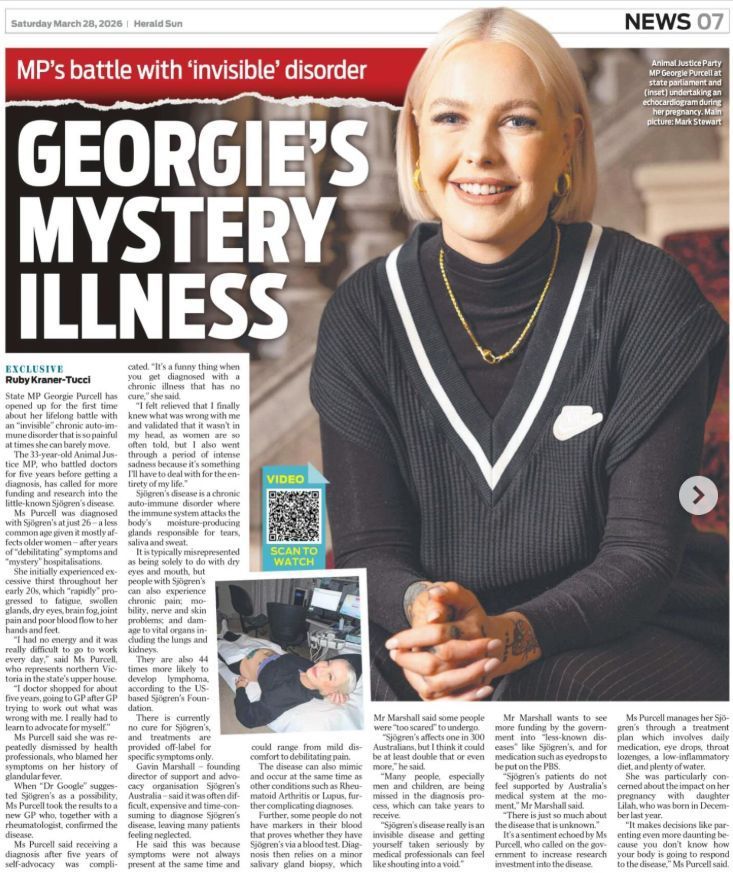
MP Georgie Purcell has opened up for the first time about her lifelong battle with an “invisible” and chronic auto-immune disorder that leaves her feeling like she can barely move during flare-ups and took five years of visiting doctors to finally get a diagnosis and help. The 33-year-old Victorian politician is urging those in power to take the little-known Sjögren’s disease more seriously, echoing calls from national advocacy groups to improve funding and research. Ms Purcell was diagnosed with Sjögren’s at just 26 – a less common age given it mostly affects older women – after years of “debilitating” symptoms and “mystery” hospitalisations. She initially experienced excessive thirst throughout her early 20s, which “rapidly” progressed to fatigue, swollen glands, dry eyes, brain fog, joint pain, and poor blood flow to her hands and feet. “I had no energy and it was really difficult to go to work every day,” said Ms Purcell, an Animal Justice Party MP who represents northern Victoria in the state’s upper house. “I doctor shopped for about five years, going to GP after GP trying to work out what was wrong with me. “I really had to learn to advocate for myself.” Ms Purcell said she was repeatedly dismissed by health professionals, who blamed her symptoms on her history of glandular fever. One doctor even misdiagnosed her with lymphoma. When ‘Dr Google’ suggested Sjögren’s as a possibility, Ms Purcell took the results to a new GP who, together with a rheumatologist, confirmed the disease. Ms Purcell said receiving a diagnosis after five years of self-advocacy was complicated. “It’s a funny thing when you get diagnosed with a chronic illness that has no cure,” she said. “I felt relieved that I finally knew what was wrong with me and validated that it wasn’t in my head, as women are so often told, but I also went through a period of intense sadness because it’s something I’ll have to deal with for the entirety of my life.” Sjögren’s disease is a chronic auto-immune disorder where the immune system attacks the body’s moisture producing glands responsible for tears, saliva and sweat. It is typically misrepresented as being solely to do with dry eyes and mouth, but people with Sjögren’s can also experience chronic pain; mobility, nerve and skin problems; and damage to vital organs including the lungs and kidneys. They are also 44 times more likely to develop lymphoma, according to the US-based Sjögren’s Foundation. There is currently no cure for Sjögren’s, and treatments are provided off-label for specific symptoms only.
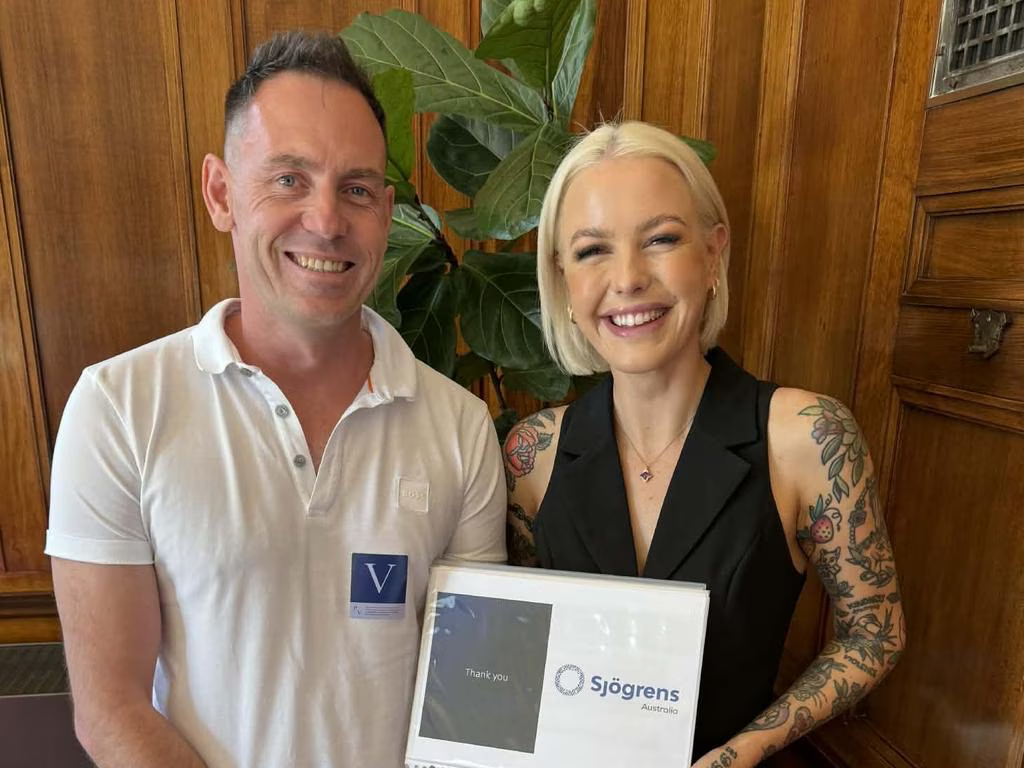
Gavin Marshall – founding director of support and advocacy organisation Sjögren’s Australia – said it is often difficult, expensive and time-consuming to diagnose Sjögren’s disease, leaving many patients feeling neglected. He said there are a few reasons for this. Firstly, symptoms are not always present at the same time and can range from mild discomfort to debilitating pain. The disease can also mimic and occur at the same time as other conditions such as Rheumatoid Arthritis or Lupus, further complicating diagnoses. Finally, some people do not have markers in their blood that proves whether they have Sjögren’s via a blood test. Diagnosis then relies on a minor salivary gland biopsy, which Mr Marshall said some people are “too scared” to undergo. “Sjögren’s affects one in 300 Australians, but I think it could be at least double that or even more,” he said. “Many people, especially men and children, are being missed in the diagnosis process, which can take years to receive. “Sjögren’s disease really is an invisible disease and getting yourself taken seriously by medica professionals can feel like shouting into a void.” Georgie Purcell MP with Gavin Marshall, founding director of Sjögren's Australia. Picture: Supplied. Mr Marshall wants to see more funding by the government into “less-known diseases” like Sjögren’s, and for medication such as eyedrops to be put on the PBS. He also urged doctors to start taking the disorder more seriously to improve the delay in diagnoses. “Sjögren’s patients do not feel supported by Australia’s medical system at the moment,” Mr Marshall said. “There is just so much about the disease that is unknown.”
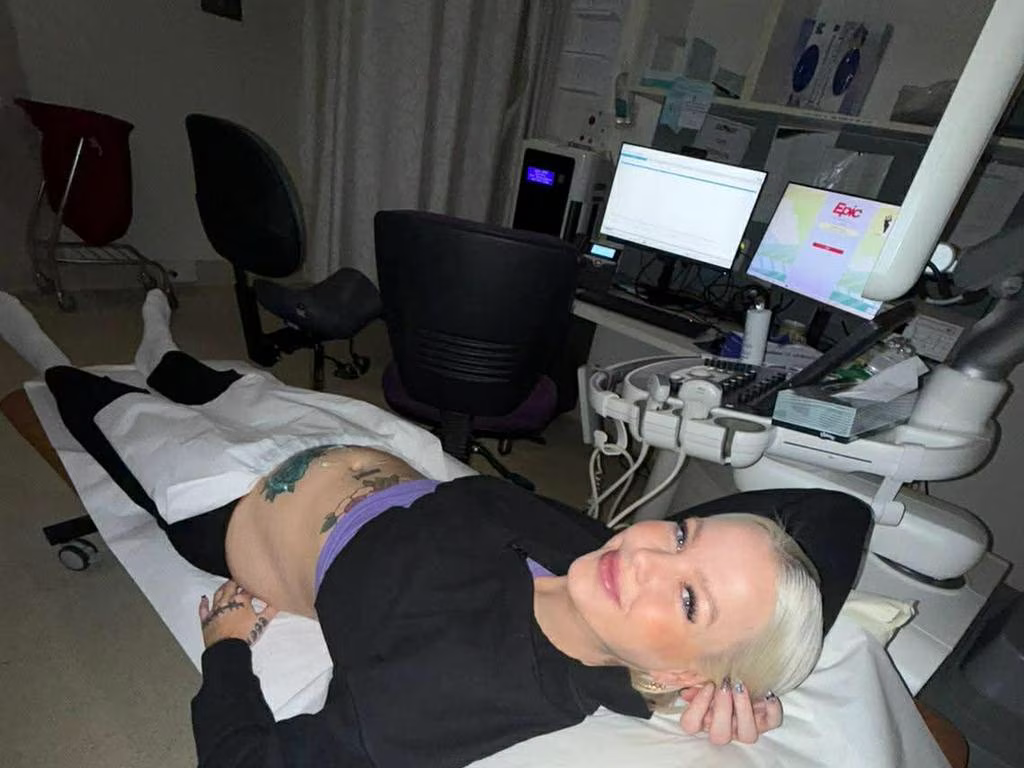
It’s a sentiment echoed by Ms Purcell, who similarly called on the government to increase research investment into the disease. “It’s really frustrating for people with Sjögren’s because it’s so misunderstood and under-researched,” she said. “No-one has even heard of its name and then when people do, the way it’s described doesn’t sound serious. “I’d love to see some recognition from state and federal ministers about the need for more work in this space here in Australia.” Ms Purcell manages her Sjögren’s through a treatment plan which involves daily medication, eye drops, throat lozenges, a low-inflammatory diet, and plenty of water. She also has steroids for flare-ups – a rapid onset of symptoms – which she said feels like “your arms and legs are dead weight when you wake up in the morning”. Ms Purcell said her flare-ups are “unpredictable” and commonly brought on by stress and fatigue. She was particularly concerned about the impact on her pregnancy with daughter Lilah, who was born in December last year. “It makes decisions like parenting even more daunting because you don’t know how your body is going to respond to the disease,” Ms Purcell said. Ms Purcell’s pregnancy was deemed high-risk because of her Sjögren’s. She was referred to the Maternal Fetal Medicine clinic at The Royal Women’s Hospital, where she was monitored once a week and sometimes more to check her baby’s heart. While Ms Purcell had a healthy pregnancy, people with Sjögren’s disease carry a higher risk of complications including congenital heart block, foetal loss and premature delivery. Ms Purcell said she “really struggled” with symptoms including pain and extreme fatigue during her pregnancy, and has since found breastfeeding difficult because of the impact Sjögren’s has on the body’s moisture-producing glands. She has learnt a lot about Sjögren’s since her diagnosis, and wants to raise awareness to help remove the stigma of living with a chronic illness. “As a member of parliament, I’ve been very outspoken about a lot of things that I think deserve visibility so other people feel seen and their issues championed even when it’s difficult or uncomfortable,” Ms Purcell said. “But I really struggle with talking about having a chronic illness because it’s invisible and I’m young, and I look healthy and well. “You think people aren’t going to believe you, because you are sick but you don’t look sick. “It is really hard to ask for help, but it is important. “I’m trying to learn when to say no, when to rest, and how to take care of myself.”