ARISE Rheumatology Event
Sjögren’s Australia advocates for patients
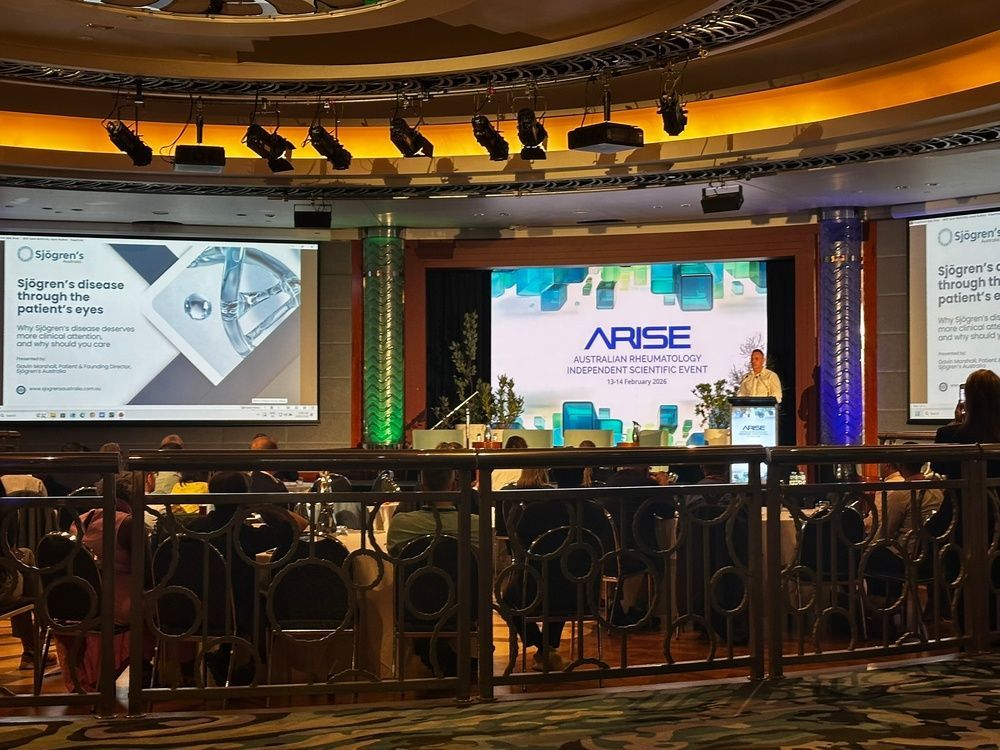
Recently, Sjögren’s Australia presented at the ARISE Australian Rheumatology Independent Scientific Event, bringing the patient perspective of living with Sjögren’s disease directly to rheumatology professionals.
The purpose of the presentation was to share the real experiences of people living with the disease and highlight where improvements in diagnosis, care and communication could make a meaningful difference. By presenting patient insights in a professional clinical setting, Sjögren’s Australia continues to advocate for greater awareness and recognition of this complex autoimmune condition.
To support the presentation, Sjögren’s Australia recently asked its community a simple question.
What do you want your rheumatologist to know about Sjögren’s disease?
Within four weeks, dozens of patients responded and shared their experiences navigating diagnosis, treatment and ongoing care. The responses revealed consistent themes about the challenges many patients face across the healthcare system.
Diagnostic delays and access to care
Many patients reported long and difficult journeys to diagnosis, often lasting several years. Barriers included difficulty obtaining specialist referrals, long waitlists and limited access for people living in regional areas.
Some respondents described worsening symptoms while waiting to see a rheumatologist. Telehealth was highlighted as a valuable option where available, particularly for patients who need to travel long distances for care.
Over reliance on serology tests
A recurring concern from patients was the reliance on blood test results alone when diagnosing Sjögren’s disease.
Some patients reported being told they did not have the condition when common markers such as SSA or SSB were negative, despite having clear symptoms and other clinical findings. Many respondents felt that symptoms and objective clinical tests should be considered alongside serology results, particularly for patients with seronegative disease.
Sjögren’s as a systemic disease
While dryness is commonly associated with Sjögren’s disease, many patients said their most disabling symptoms are systemic.
Fatigue, chronic pain, neurological symptoms, respiratory issues, gastrointestinal problems and skin manifestations were frequently mentioned in survey responses. Patients consistently emphasised that Sjögren’s affects far more than the eyes and mouth and can have a significant impact on daily functioning and quality of life.
The importance of listening and validation
Experiences with healthcare professionals varied widely among respondents. Positive care experiences were described as those where clinicians listened carefully, communicated clearly and validated patient symptoms.
Patients reported feeling a strong sense of relief once their condition was recognised and diagnosed. In contrast, dismissive interactions or comments that minimised symptoms were reported to affect trust and confidence in care.
Many respondents also noted that when clinicians took the time to explain the condition and discuss what to expect, it helped reduce anxiety and uncertainty.
Fragmented care between specialties
Another common theme was fragmented care. Patients often described seeing multiple specialists for different symptoms without coordination between them.
This can leave patients managing their own care pathway across rheumatology, general practice, ophthalmology, dentistry and other specialties. Where coordination between providers did occur, patients reported significantly better outcomes and greater confidence in their treatment.
Lack of practical care plans and guidance
Many patients reported that after receiving a diagnosis they were left without a clear plan for managing the condition.Respondents said they wanted practical guidance on what symptoms to monitor, when to escalate concerns and how to manage the disease in daily life. Several said they had turned to online communities and support groups to find the information they needed. Patients expressed a strong preference for credible resources and practical support alongside medical treatment.
What patients are asking for
Across the responses, patients consistently highlighted several improvements that could help strengthen care. Patients want greater recognition that Sjögren’s disease can be systemic and complex. They want diagnosis to consider symptoms and objective testing, not blood tests alone. They want clear care plans, practical guidance and reliable education following diagnosis. Patients also want improved communication, empathy and collaboration between clinicians, along with better coordination between specialties and improved access to care including telehealth options.
Continuing advocacy for Sjögren’s awareness
The presentation at the ARISE event was an opportunity to share system level patient experiences with rheumatology professionals.
The feedback presented reflects consistent patterns reported by patients across Australia. It was shared as an opportunity to strengthen understanding, improve communication and ultimately support better outcomes for people living with the disease.
Through opportunities like this, Sjögren’s Australia continues to advocate for greater awareness, earlier diagnosis and more coordinated care for the Australian Sjögren’s community. When patients feel heard and understood, it can have a meaningful impact on trust, engagement with care and overall wellbeing.